Latest Post
Showing posts with label Tablets. Show all posts

Average display sizes keep on growing in tech, smartphones lead the way

You have witnessed it with smartphones in the last couple of years, but it’s a trend all across the industry - screen sizes are growing, according to the latest study by NPD Display Search.

Actually, if we take away OLED TVs which have started appearing massively recently, phones show the fastest growth in screen size. In 2010, the average handset screen size was merely 2.4 inches, growing to 2.6” in 2011, and 3 inches on average this year. In 2013, the average mobile phone will have a screen of 3.3 inches, as more and more people switch to owning a smartphone.

In the four years since 2010, that would be a growth of 38%. In 2012, we’ve seen most high-end Android handsets to feature 4.7-inch and larger display.

And that’s how it is all across the industry. There is one notable exception and that is mobile PCs, where we’ve seen sizes actually decline and the focus shift to portability. Tablets are a key part of that development. With 10.1-inch Android tablets, the 9.7-inch iPad and the growth of 7-inch affordable tablets, mobile PCs are getting dragged down.

How do you feel about that overall growth of screen sizes? How far can it go for smartphones?


Source: NPD

iPad mini: what we think we know

Apple has a little something to show us on October 23, and we all believe we know what that might be. A smaller, more affordable iPad model is expected to be announced – presumably called the iPad mini and likely destined to take down Amazon and Google as the dominant names on the 7-inch tablet arena. Obviously, the device isn't official yet, but at the same time, rumors about it have been going back and forth for months. Yeah, we know that security at Apple isn't as tight as it used to be. But thanks to those rumors, we believe we already know quite a lot about the iPad mini, although some pieces of the puzzle have yet to be revealed. Care to go over what we have so far and see what the iPad mini is shaping up to be?


Design
The iPad mini will probably look like this
Knowing Apple, we are expecting the iPad mini to look a lot like a miniaturized version of the current iPad, with clean, minimalist design, a slender waistline and rounded corners. After all, why would anyone want to change a working formula? Furthermore, thanks to all the leaks, we have enough reasons to believe that the body of the device will be made out of aluminum. Without a doubt, the new Lightning dock connector will be on the bottom, replacing the now-obsolete 30-pin interface and possibly rendering some of your existing accessories unusable, but those who want to keep using the peripherals they own will have the option to purchase a $29 adapter from Apple. As far as variety is concerned, it is rumored that the iPad mini will come in white or black. But most importantly, the device will surely be more compact and even easier to handle than its predecessor due to the smaller size and reduced weight.


Display

The size of the display on the iPad mini doesn't seem that hard to predict either as the rumor mill has been pointing at the same figures for months – chances are that a 7.85-inch screen will be gracing the front of the device. But while the screens used by the Android competition have a widescreen aspect ratio (16:10 or 16:9), Apple's smaller tablet will stick with the 4:3 proportion. And that's not a bad thing at all! As a result, the iPad mini will have a display with 40% more surface area compared to the screens found on the Google Nexus 7 or the Amazon Kindle Fire HD. On the downside, movies will either have those nasty black stripes on the bottom and top, or will be cropped from the sides. The resolution of the screen is rumored to be 1024 by 768 pixels, which is bad news for everyone who has been hoping to see a Retina display on the iPad mini, but on the other hand, that would keep the production cost (and probably the retail price) of the device down.

Microsoft Surface RT prices appear: $499 with no Touch Cover, $599 with it


Microsoft Surface RT prices have leaked out. The 10.6-inch tablet designed and made by Microsoft will cost as much as the iPad. Prices start at $499 for the most basic 32GB version, but that won’t buy you that neat Touch Cover keyboard dock. For a dock-equipped Surface, you’d need to shell out $100 more, bringing the total to $599. 

The 10.6-inch Surface comes with a paltry “HD” resolution that is likely to be 1366 x 768 pixels. And that just doesn’t compare well with the third-gen iPad and its whopping 2048 x 1536-pixel screen and thousands of apps.

Here is how the prices for Windows RT Microsoft Surface tablets break down:

  • 32GB Microsoft Surface RT without Touch Cover - $499
  • 32GB Microsoft Surface RT with Touch Cover - $599
  • 64GB Microsoft Surface RT without Touch Cover - $599
  • 64GB Microsoft Surface RT with Touch Cover - $699

So it goes in a direct battle with the iPad. The advantages? It’s got that vapor-deposited (PVD) magnesium case in a 9.3mm thin body weighing only 1.5lbs, and featuring a built-in kickstand.

The touch cover alone would sell for $119, and the type cover with hardware keys will retail for $129.

So there you have it - if you still had hopes that the Surface would be the cheap option, you can finally put those to rest. Is that really competitive? And will it stand a chance against the iPad? Microsoft is bullish and is said to have ordered 3 to 5 million for the Holiday quarter. Do you agree? Let us know your thoughts in the comments below.


Source: Microsoft Store via TheVerge

Apple allegedly telling suppliers to prep for the iPad 4, coming mid-2013 with two-chip LEDs


Those all-knowing "supply chain sources" are chiming in for something so far out in the future as the next generation iPad. Well, for us it seems far out, but Apple undoubtedly has a very good idea what will go into their next iPad unit, so it has allegedly warned suppliers to start prepping with new equipment.

The next-gen iPad will reportedly feature the same 9.7" screen size, but the "Resolutionary" display which be much simplified, with half of the 84 LED units needed now for the backlighting, which complicate the design and consume battery life. The 2013 iPad will be using two-chip packages instead of single chip ones for those LED lights now.

This should lead to reduced power consumption and more internal room, which we have no doubts will be used by Apple to stuff some top-notch features and hardware, or an even bigger battery inside.


Source: Digitimes

Lenovo IdeaTab Lynx Windows 8 Tablet with Optional Keyboard Dock

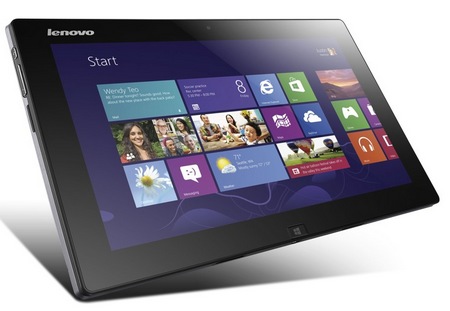
Lenovo will also release the IdeaTab Lynx Windows 8 hybrid tablet/notebook targeted at mainstream consumers. Unlike the IdeaPad Yoga and ThinkPad Twist with integrated keyboard, the IdeaTab Lynx has a optional detachable keyboard dock featuring AccuType layout for comfortable typing. The dock also packs 6800mAh battery to double the battery life to 16 hours. You can remove the Lynx from the keyboard dock and uses it as a standalone tablet.

Lenovo IdeaTab Lynx Windows 8 Tablet with Optional Keyboard Dock remove
The IdeaTab Lynx is powered by latest Intel dual-core Atom processor and 2GB RAM, and has 32GB or 64GB SSD storage. It features a 11.6-inch IPS multitouch touchscreen display, a 2 Megapixel front-facing camera for video chat and Dolby Home Theater for cinema soun. The tablet itself has a micro USB port, micro HDMI output and a microSD/SDHC card, while the keyboard dock has two USB 2.0 connectors for connecting printer, external drive and other accessories.

Lenovo IdeaPad Yoga 11 and Yoga 13 Convertible Hybrids for Windows 8

Lenovo adds to its IdeaPad line two new convertible hybrid notebook/tablet computers, the Yoga 11 and Yoga 13, designed for Windows 8. With Yoga as their name, both convertibles has a flip-and-fold design, featuring a hinge that allows them to move 360-degree and fold from laptop to tablet in one simple motion. The bigger Yoga 13 is basically a multi-mode Ultrabook powered by Intel x86 processor and runs Windows 8 Pro, while the Yoga 11 runs Windows 8 RT on ARM-based processor.

Lenovo IdeaPad Yoga 13 Convertible Hybrid Notebook Tablet Windows 8
Lenovo IdeaPad Yoga 13

The IdeaPad Yoga 13 is powered by Intel’s Ivy Bridge 3rd gen Core i5 or i7 processor, up to 8GB of RAM and up to 256GB SSD storage. It has a Ultrabook design, ad measures just 16.9 mm thick. The 13.3-inch IPS display features 1600×900 resolution and multitouch. You can also find a 720p front-facing camera for video conferencing, Dolby Home Theater sound enhancement, USB 3.0 port, media card reader and HDMI output. It promises 8 hours of battery life.

Apple iPad bought at Walmart turns out to be nothing but notepads

15 year-old Courtney Akers in Texas was excited as she could be. Her Mom had just returned home from Walmart carrying Courtney's birthday present, a brand new third generation Apple iPad. Yeah, Courtney just couldn't wait to feast her eyes on that Retina display that has been the focus of Apple's marketing of the device. So when she opened the box, to her horror, instead of an iPad was a stack of yellow notepads.
Instead of an Apple iPad, the box contained notepads
You might recall a similar story in August of 2011 when a 22 year old woman in South Carolina purchased what she thought was an Apple iPad from two men for $180. Inside the box was a bizarre looking chunk of wood pained black with the Apple logo glued to it. That transaction, though, took place on the street while Courtney's Mom purchased the birthday gift at a reputable store.

When Courtney's Mom raced back to Walmart, the manager refused to do anything for her. After more than two hours of discussion, he would not let her get a refund or an exchange and instead, accused the family of concocting an elaborate hoax. The company, though, later went over the manager's head after being contacted by a local television station. The retailer tracked the box and found that the Akers had been ripped off. The retailer will replace the notepads with a real Apple iPad. But how could this happen? Walmart's theory is that someone bought an Apple iPad, took out the tablet, replaced it with the notepads, and resealed it to look like it had never been opened.


Source: phonearena

Here are the latest iPad mini renderings, including one in blue


The Apple iPad mini has hit the rumor mill way too often to be ignored. As a matter of fact, expectations are that Apple will officially announce it on October 17th, with a launch on November 2nd. 

And so far, there are plenty of mockups, leaks and basically all the information you need to create the perfect-looking iPad mini renderings. This is exactly what designer Martin Hajek set out to do, and quite successfully. Hajek has paints the iPad mini in white and black, but he also takes the liberty of making a blue render, and it looks gorgeous. We don’t expect Apple to release a blue tablet any time soon, but some time in the future, we definitely wouldn’t rule it out.

So far, we suspect the iPad mini to have a 7.85-inch displaywith a resolution matching the one on the second-gen iPad (1024 x 768 pixels). It’s expected to feature a narrower bezel and the new lightning connector as well. Check out these pretty renderings below, and let us know - would you be buying it if it looked like that?


Source: Martin Hajek via Apple Insider

32GB Google Nexus 7 could be real after all, more listings emerge


Just a couple of days ago, evidence in support of the existence of a 32GB Google Nexus 7 tablet was leaked on the web. The clue was in the form of a listing in the inventory of U.K. retailer Carphone Warehouse. Fast forward two days into the future and today, a Nexus 7 with 32GB of storage has appeared online once more, this time on the web sites of other online retailers.

Currently, the tablet is labeled as "out of stock" or "unavailable" and all the information in the listings is nothing but a quick summary of the device's hardware specs - 1.2GHz Tegra 3 processor, Android 4.1, Bluetooth, and of course, 32 gigabytes of on-board storage. A photo of the Google Nexus 7has not been posted. Interestingly, one of the retailers has put a price on the rumored device of $260, which is only $10 more than what the 16GB retails for.

One way to interpret this is that Google might want to refresh its tablet lineup and slash about $50 or so off the price. A cheaper Nexus 7 would be even more competitive in case an iPad mini happens to be released by Apple. Of course, that is just a presumption, and the listings we've been seeing over the past few days could be nothing but placeholders. Oh well, guess we'll have to wait and see what the truth turns out to be.


Source: Buy.com via Android Authority

Publisher earns $8 million in one year thanks to Apple iOS's Newsstand

Well, it turns out people are still reading magazines. Digital magazines, in particular, have been seeing a terrific boost these days thanks to the iPad, where Apple promotes books and magazines via the iTunes store and iBookstore. Last year, the iOS 5 software brought a new feature called Newsstand, which was geared specifically towards digital magazine reading. Newsstand allows you to easily discover, purchase, organize and read magazines on an iPad or iPhone (preferably on iPad...), and it looks like some publishers are taking full advantage of it.

UK publisher Future, for example, has made the impressive $8 million from Newsstand so far, having its content available through the service right from the start, which was about a year ago. This became known during the company's interim trading update on Thursday:
Sales of digital editions on Apple devices have passed £5 million ($8 million) in the period since the Apple Newsstand was launched in October 2011.

Future offers popular titles such as PC Gamer, T3 and MacLife. As a whole, the publisher has seen a substantial growth in its digital distribution business ever since the launch of Newsstand, while before it had to rely on web portals like TechRadar, GamesRadar and BikeRadar in order to reach consumers.

However, not all publishers are experiencing the success of Future, so how did they pull it off? Well, it's possible that the company's in-house developed software suite, FutureFolio, has played a major role in this. FutureFolio is a set of tools which helps in the design of digital magazines, especially such with interactive elements. Future is now even trying to license the software to its competitors.

Meanwhile, most publishers do realize the growing mobile device / tablet audience, but they aren't seeing a proportional growth of their earnings from mobile devices right now. More often than not, publishers seem to blame ad agencies, which they say do not take the mobile market seriously enough yet. Others say that the dependency on low-yield ad networks is the culprit. When it comes to Android tablets, though, the lack of consumer-centric interface and general lack of content can be seen as a major reason for people not willing to invest heavily into the yet developing ecosystem.

ASUS starts pushing Jelly Bean to Transformer Prime tablets...in Sweden

If you are one of the many people who picked up the popular ASUS Transformer Prime tablet and you happen to live in Sweden you should start to see the long-awaited Jelly Bean update start to roll out today. This news comes from a post to ASUS’s customer service people on their Facebook page (see below). For the rest of the ‘Prime owners world-wide, it’s still good news that ASUS is apparently far enough along in their testing and certification phase that they are starting to send the update over the air.

Given the time frame (around two months since Android 4.1 hit AOSP status) from the release of Jelly Bean to it starting to hit devices, it’s clear that it is significantly easier to update Android 4.0 devices to 4.1 then it was to make the jump from Gingerbread to Ice Cream Sandwich. In the meantime, those of you waiting for some JB goodness for your ASUS tablets hang in there, it should be on the way in short order.
ASUS starts pushing Jelly Bean to Transformer Prime tablets...in Sweden


Source: ASUS via Droid-Life

First Impressions: Starmobile Engage 7-inch Android tablet

Starmobile is Filipino mobile phone company that specializes in affordable feature phones of their own design. It’s no surprise that sooner or later the company will also release their own Android devices.

The Starmobile Engage is their first Android tablet at 7-inch and has a retail price of just Php5,990. Can’t believe the price right? At that price, what you can usually get are entry-level Android smartphones.

We received a unit of Starmobile Engage recently so allow us to share to you our first impressions.
starmobile engage 2
Inside the box, you’ll get the tablet itself, the charger, generic earphones, manual and the warranty card. Pretty basic stuff.
starmobile engage 3
Lifting the Engage we immediately notice how light it is. The 7-inch display has a wide bezel surrounding it with the Starmobile logo below it. If you notice that the display is not that sharp, well it’s because of the low 800 x 480 resolution which you rarely see even in smartphones with 4.3-inch display.
starmobile engage 4
It has a curved back with a matte black finish to discourage smudges and fingerprints. Upper right at the back you’ll find the typical 3.0 megapixel camera (no flash) you find in entry-level Android phones. Speaker grill is located on the lower right portion at the back. There’s also a VGA camera in front which works with video calls like Skype.

At the bottom edge of the tablet you’ll be greeted with a whole LOT of ports. From left to right you’ll get the Home button, Reset pinhole, mic, 3.5mm earphone jack, DC charging port, mini-USB, a regular USB, standard HDMI port, microSD slot, and the Power/Sleep button.
starmobile engage 5
The Starmobile Engage is a WiFi-only device but you can use your 3G or 3.5G USB dongle with it. You can also plug in a USB flash drive and access its contents with this tablet. You need a file explorer app for it though which you can easily get from Google Play.

This tablet runs on Android 4.0 Ice Cream Sandwich already and is powered by a single-core 1.2GHz CPU with 1 GB RAM. Haven’t really used it that much but I experienced a little bit of lag when waking this device. There’s a 5GB internal storage here so you’d want to make use of the microSD slot for expansion.

Bottomline here is the Starmobile Engage won’t “wow” you in terms of looks but it has a unique design compared to other budget tablets in the market. The specs are not something you will like to show off either but they’re serviceable for the price that you are paying for. You will also get a lot of functionalities out of this device thanks to its myriad of ports.

The thing is, for just Php5,995, you’ll get a lightweight 7-inch Android tablet you can use to watch videos, surf, read books, video chat and play casual games with. Starmobile also prides itself with the high-quality of customer support they give which is their edge over other affordable brands in the market.

Starmobile Engage
 
1.2GHz A10 Cortex A8 CPU
7-inch Capacitive Multi Touch Display, 800×480 pixel resolution
1GB RAM, 5GB internal storage, expandable via microSD to 32GB
Android 4.0 Ice Cream Sandwich
3-megapixel rear facing camera
0.3-megapixel front facing camera
WiFi, HDMI, USB OTG, supports 3.5G modem
No Bluetooth
3000mAh Battery
SRP: Php5,990
 
 
 Source: pinoytechblog


Round-up: Top 7 seven-inch Tablets

Last week, we featured our top 5 tablets above 7-inch and as promised, here’s another rundown of the top 7-inchers based on what we think has the best price-to-feature ratio. Check out our list after the break.

1. Google Nexus 7 – this tablet clinched the top spot on our list because of the obvious reason that it’s by far the cheapest quad-core slate in the market. Yes, it has its fair share of shortcomings but its sleek design, snappy performance and very competitive price tag well compensates for its deficiencies. Check out our full review of the Google Nexus 7 here.

2. Acer Iconia Tab A110 – in our opinion, if this tablet had been launched earlier, it would’ve put up a good fight against the Nexus 7. A revamped version of the A100, the Iconia Tab A110 had the crucial features that the Nexus 7 lacked which kept people from getting it, but its delayed announcement and the slightly higher price tag is not enough to snatch the top place in our list.

3. Ainol Novo 7 Crystal – of all the Chinese tablets that are available in the market, the one that usually stands out are the ones that came from Ainol. Ainol tablets hit the sweet spot because it has a very good price-to-feature ratio. Their latest creation, the Novo 7 Crystal, continues the lineage of affordable tablets that won the hearts of the not-so-picky consumers. The Ainol Novo 7 Crystal can be had for $139.90 on their website and it may not be too long before local retailers sell this tablet.


Source: yugatech

Acer announces Iconia Tab A110, Nexus 7 contender

Acer has now formally announced the Iconia Tab A110 which is set to replace the thick, dual-core A100 from last year.

First spotted at this year’s Computex, the Iconia Tab A110 looks to put up a good fight with the Nexus 7. Both these 7-inch tablets’ specs are virtually identical even the OS that comes pre-installed with it out of the box are the same.
If anything, the Iconia Tab A110’s edge over the Nexus 7 is its expandable memory via Micro-SD card slot which was one of the main features missing on the latter. The newly announced tablet also sports a micro-HDMI port for extra connectivity option. However, Acer’s new tablet’s Achilles heel is its sub-par display which only has 1,024 x 600 screen resolution compared to the Nexus 7’s 1,280×800.

The Acer Iconia Tab A110 will have a slightly higher price tag compared to the Nexus 7, £20 to be exact. The tablet has just been announced in the U.K and a global launch is still yet to be announced. So are you willing to give away a few pixels for the ability to expand your storage via Micro-SD slot or you’d rather stick with the Nexus 7?

HP tablet for the enterprise market coming soon

Just hours ago, HP posted a press release on its web site announcing a new lineup of consumer and business PC products, including desktop and notebook computers. However, right down at the bottom of the post, the company also gave us a clue regarding a product, which a recent advertisement might have already outed. "An enterprise-ready tablet will be announced soon," HP stated, without revealing any further details whatsoever.

HP is working on an enterprise-ready tablet
Now, we might not know what the hardware specs of this upcoming device will be, yet we can safely assume that HP is not planning to ship the said device with Android. Instead, it seems likely that the tablet will run a flavor of Windows 8 – either Pro or RT, depending on what kind of processor it is powered by. Or at least that is how we interpret the slate's enterprise readiness. We are also expecting to see an Intel processor humming inside the tablet, given HP's statement that it isn't planning any ARM-based hardware for now.

That is pretty much all we know so far, and we hope to have more details on this HP tablet sooner than later. Is anyone excited to see what kind of slate HP has in stock for us?

source: HP via Engadget

Amazon Kindle Fire HD gets rooted

Earlier this week, word had it that the newly-announced Amazon Kindle Fire HD tablets might be more difficult to hack than their predecessors. The reasons behind that statement were the processor's advanced security features and the signed bootloader, which prevent users from loading custom firmware onto the slate. In other words, aftermarket ROMs with stock Android builds instead of Amazon's heavily customized, and somewhat limited software seemed like a no-go.

However, there seems to be light at the end of the tunnel now that the 7-inch Amazon Kindle Fire HD tablet has been rooted. In fact, anyone who wants to obtain root access on their Fire HD (and void its warranty along the way) is free to open up XDA Developers and follow the how-to guide, which has been posted a few days ago.

Now, this doesn't mean that Jelly Bean ROMs will show up overnight as the signed bootloader is still in the way, but it seems like we are off to a good start. That said, in case you feel like tinkering with your Kindle Fire HD's software, check out the source link below. Just keep in mind that you are on your own, so don't blame us should your tablet get bricked along the way.


Microsoft Surface for Windows RT and Windows 8 Pro

Microsoft Surface for Windows RT and Windows 8 Pro
You may have heard of Microsoft’s Surface, the a multitouch table. The software giant has re-introduced the brand, launching the own-branded Surface tablets running Windows. Two versions are available, the Surface for Windows RT and Surface for Windows 8 Pro. Both Surface tablets have a all-magnesium VaporMg case with built-in kickstand, which is good for watching video.

Microsoft Surface for Windows RT and Windows 8 Pro back
The Surface for Windows RT is based on ARM processor and is confirmed to be powered by NVIDIA’s Tegra 3 quad-core processor. It features a 10.6-inch ClearType HD touchscreen, micro HDMI video output. The Windows for ARM tablet comes with 32GB or 64GB internal storage and has USB 2.0 port and microSD card slot, and supports WiFi connectivity with 2×2 MIMO antennae. It measures just 9.3mm thick and weighs 676g. Running Windows RT, this model comes pre-loaded with Office 15 apps. The tablet comes packs 31.5 W-h battery.
Microsoft Surface for Windows RT and Windows 8 Pro side
The Surface for Windows 8 Pro, on the other hand, is basically a x86 tablet boosted by Intel Ivy Bridge 3rd gen Core processor. This model is just like an Ultrabook without keyboard. It also gets a 10.6-inch ClearType touchscreen, but is enhanced with Full HD resolution, and can be used with stylus pen There are microSDXC card slot, USB 3.0 and Mini DisplayPort port and the 2×2 MIMO antennae for WiFi. The Windows 8 Pro version comes in 64GB and 128GB. Compare to ARM version, this version gets more advanced features but at the same time is thicker and heavier, measuring 13.5mm thick and 903g. It battery is also bigger with 42 W-h capacity.

Panasonic Toughpad A1 and B1 Rugged Business Android 4.0 Tablets

Panasonic Toughpad A1 and B1 Rugged Business Android 4.0 Tablet
Panasonic expands its business computing offering, introducing the new Toughpad line. Like the company’s Toughbook, the new Toughpad is rugged and intended to be used in all conditions. Both 10.1-inch Toughpad A1 and 7-inch B1 are MIL-STD-810G and IP65 certified for ruggedness featuring a sealed all-weathered design. They have magnesium alloy chassis encased with ABS and elastomer. The Toughpad will be shipped with Android 4.0 Ice Cream Sandwich OS.

Panasonic Toughpad A1 Rugged Business Android 4.0 Tablet angle 1
The A1 is powered by a Marvell 1.2GHz dual-core processor with 1GB of RAM. The 10.1-inch multitouch and digitizer daylight-readable screen has 1024×768 resolution, LED backlit and 500-nit brightness. It sports a 5 Megapixel main camera with auto focus and LED flash, and a 2 Megapixel front camera for video chat.The rugged business tablet comes with 16GB internal flash storage and supports microSD/SDHC up to 32GB. As for connectivity, you can expect Bluetooth 2.1, WiFi 802.11a/b/g/n, GPS and optional 4G LTE or WiMAX. It comes with a stylus for flexible data entry in the field, as well as signature capture and handwriting recognition functionalities.
Panasonic Toughpad A1 Rugged Business Android 4.0 Tablet 2
The device has a 4590mAh battery pack that allows up to 10 hours of use. It boasts integrated speakers, microphone and micro HDMI ouptu. As a business tablet, the Toughpad A1 comes with embedded security processor, hardware encryption, software encryption, trusted boot as well as FIPS 140-2 and enhanced enterprise VPN.

Archos 80 G9 Turbo ICS Android 4.0 Tablet


Archos 80 G9 Turbo ICS Android Tablet
Archos launches its Archos 80 G9 Turbo ICS tablet. As its name tells, the 8-inch tablet runs Android 4.0 ICe Cream Sandwich. It is powered by a 1.5GHz OMAP multi-core processor. The ICS tablet has a 1024×768 touchscreen, a 720p camera with HD 720p video recording.


The Archos 80 G9 Turbo ICS supports Bluetooth 2.1+EDR, GPS, and WiFi connectivity and comes equipped with g-sensor, e-compass. It offers HDMI output and USB HOST port. There are 8GB and 16GB models that are priced at GBO199.98 and GBP239.99 respectively.

Lenovo wants to be the “first to market” a Windows 8 tablet


We all know that this will be the year that Microsoft unleashes their first tablet friendly OS, Windows 8, onto the world. Naturally, different PC manufacturers are jostling for the honor of being the first to deliver a tablet based on the new OS when it launches later this year. Lenovo is one such manufacturer, and according to The Verge, the Chinese company is internally planning to be the first one to market with their own Windows 8 tablet, which the tech outfit says would likely be the recently announced IdeaPad Yoga, the 13-inch transforming tablet/notebook hybrid the was first unveiled during January during CES. We’ll just have to wait if the firm can follow through with that promise come October, when which is when Lenovo believes is the month when Microsoft releases the new OS.
Source: The Verge
 
Support : Creating Website | Johny Template | Mas Template
Copyright © 2011. PctechPortal - All Rights Reserved
Template Created by Creating Website Published by Mas Template
Proudly powered by Blogger